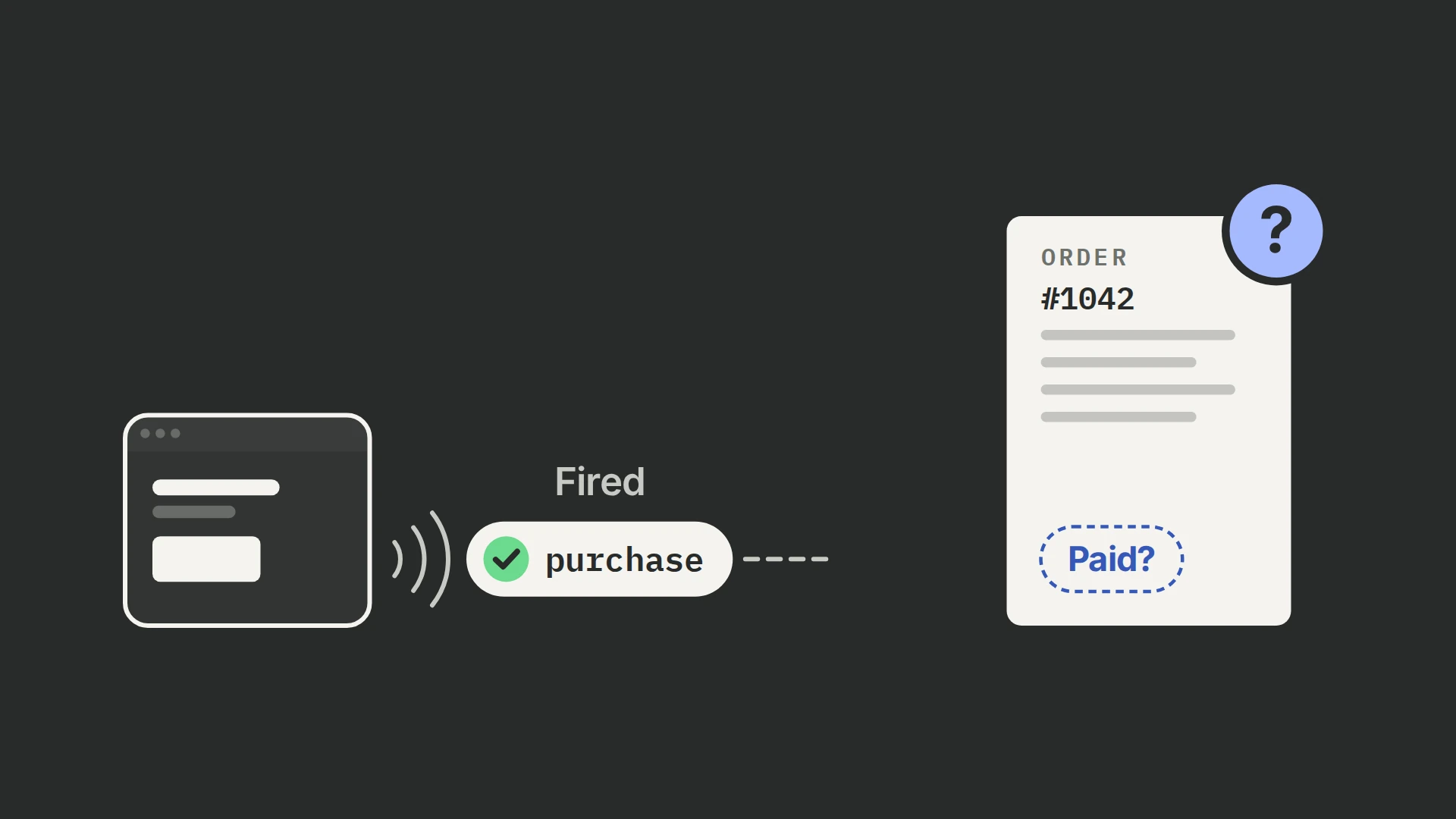

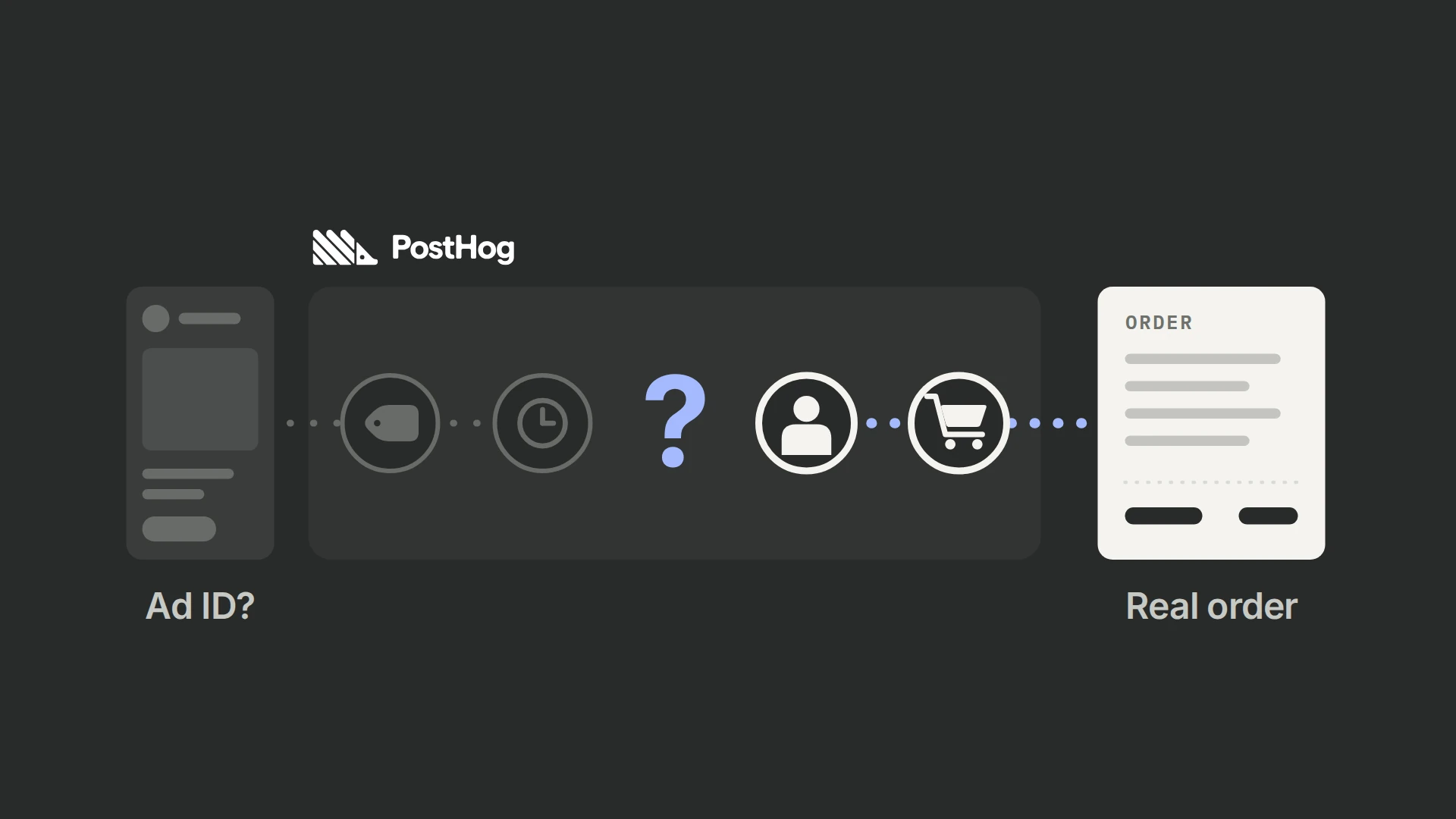
Check that PostHog records the events, properties and IDs each of your decisions needs, then trace one real outcome through them. Take a captured payment, a qualified lead or an activated account from the system that owns it, follow it backward through PostHog’s value, event, source, session and identity records, and reconcile that relationship across the full reporting period. The twelve checks show the evidence each link needs.
Trust belongs to a decision. Anonymous sessions may support a content report while missing checkout identities make campaign revenue unsafe. The twelve checks below follow dependency order: a correct query cannot repair a purchase value that was wrong when it arrived.
Use the summary to locate a gap and copy the scorecard into your audit notes. Each check ends with the evidence needed to decide whether that part of the implementation passes.
In this guide
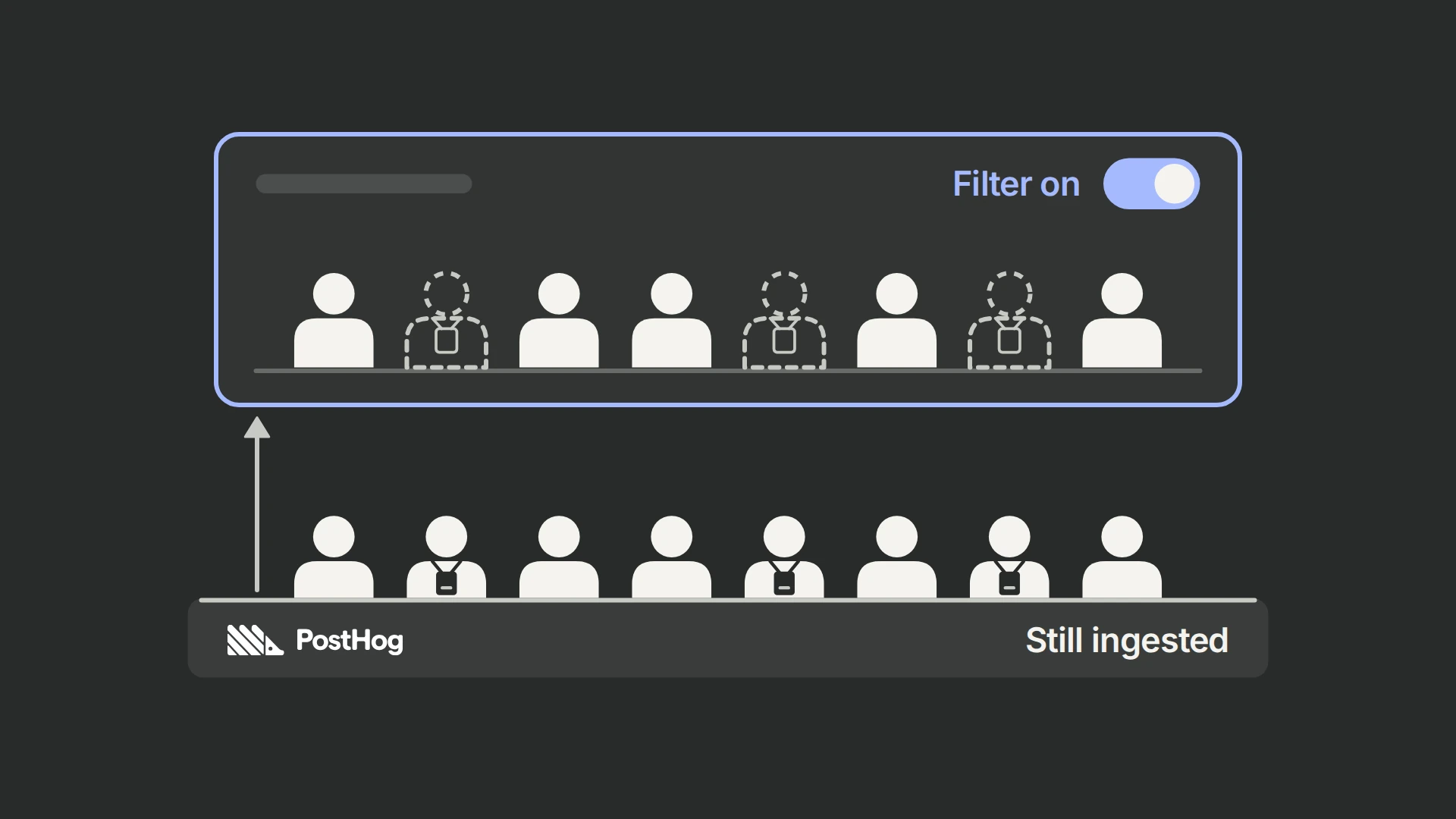
How to Filter Internal and Test Users in PostHog (and What the Filter Does Not Do)
Each rule describes traffic to keep. Test an employee, a customer and an anonymous visitor before applying the rules to saved reports.
What this audit establishes
The audit tests an existing PostHog implementation: whether its identities, source fields, event triggers, values and queries agree well enough to support the decisions in scope.
The conversion tracking audit sets out the tool-agnostic framework and five trust tests applied here to PostHog’s collection and analysis surfaces.
When an audit finds that purchase_completed fires before payment succeeds or program_started has no program ID, specify the corrected trigger and properties in the tracking plan.
The 12 PostHog audit checks
| Check | What it must prove | Typical decision at risk |
|---|---|---|
| 1. Decision scope and business truth | The project has explicit questions, entities, definitions, and systems of record. | Every downstream metric |
| 2. Acquisition identifiers at entry | UTMs, platform IDs, and click IDs arrive intact on the first eligible event. | Channel, campaign, and ad reporting |
| 3. Source persistence | Initial, latest, and session-entry source data remain available intentionally. | Attribution and cohort analysis |
| 4. Journey continuity | Sessions and identities survive required domain, app, checkout, and backend transitions. | Funnels and source-to-revenue linkage |
| 5. Identity architecture | Anonymous, known, account, session, and transaction identities are sufficient for the use case. | LTV, retention, personalization, attribution, experiments |
| 6. Event semantics and triggers | Events represent real business or product state changes at the correct moment. | Funnel and behavior analysis |
| 7. Properties and queryability | Required IDs, values, dimensions, types, and context are present and consistent. | Segmentation, revenue, and metric construction |
| 8. Collection and deduplication | Browser, server, webhook, consent, retry, test, and bot behavior do not manufacture or lose facts. | Counts, conversion rate, and revenue |
| 9. Revenue reconciliation | Purchases and lifecycle value match commerce, billing, or backend systems. | Revenue, LTV, and profit reporting |
| 10. Attribution and spend matching | Source rules and ad-cost joins are explicit, reproducible, and appropriately granular. | ROAS and budget allocation |
| 11. Metric and query validation | Key reports use correct entities, filters, windows, denominators, and dates. | Management dashboards and decisions |
| 12. QA, monitoring, and governance | Owners can detect and repair drift after the audit. | Long-term reliability |
If employees or QA appear in reports, start with our internal-user filtering guide. For capture you pay for and never use, read our cost guide. When destinations need the visitor’s IP, use our IP capture guide.
- 1. Define what PostHog must be trusted to answer
- 2. Verify acquisition-source and ad identifiers at the landing event
- 3. Verify source persistence through the session and conversion journey
- 4. Verify continuity across domains, apps, checkouts, and backend systems
- 5. Verify that the identity architecture is sufficient—not maximally complex
- 6. Verify that events mean what their names claim
- 7. Verify properties, data types, coverage, and queryability
- 8. Verify browser/server collection, environments, consent behavior, and deduplication
- 9. Reconcile purchases, revenue, refunds, and renewals with business systems
- 10. Validate attribution rules and ad-cost matching
- 11. Validate metrics and queries—and trace a real purchase backward
- 12. Establish production QA, monitoring, ownership, and governance
Copy the twelve-check scorecard
Copy this table and add links to the actual events, queries and exports. Leave a status open until its evidence exists; use the conversion tracking audit for the shared severity scale.
| Check | Evidence to attach | Status / decision affected / owner / next test |
|---|---|---|
| 1. Decision scope | Decision and source-of-record matrix | Open — fill for your project |
| 2. Acquisition entry | Landing events and platform field map | Open — fill for your project |
| 3. Source persistence | Event, initial, latest and session-entry trace | Open — fill for your project |
| 4. Journey continuity | Domain, app and checkout transition tests | Open — fill for your project |
| 5. Identity | Person traces and canonical ID map | Open — fill for your project |
| 6. Event meaning | Trigger tests and confirming business records | Open — fill for your project |
| 7. Property quality | Coverage, types and usable join keys | Open — fill for your project |
| 8. Collection | Browser/server matrix and retry tests | Open — fill for your project |
| 9. Reconciliation | Matched, missing, duplicate and value differences | Open — fill for your project |
| 10. Attribution | Campaign matching and spend join | Open — fill for your project |
| 11. Query validation | Independent rebuild and backward outcome trace | Open — fill for your project |
| 12. Ongoing QA | PostHog warnings, saved checks and owners | Open — fill for your project |
1. Define what PostHog must be trusted to answer
Write down the decision, its counting unit, time basis and authoritative system before opening a dashboard. Include the decisions you can make with anonymous data and those that require a person, account, session or transaction join.
| Question | Fact to reconcile | Likely owner |
|---|---|---|
| Which campaigns produce paid orders? | Captured payment and source-to-order join | Payment processor or commerce backend; PostHog journey events |
| Where does activation fail? | Defined activation state and eligible accounts | Product backend and PostHog events |
| How much did we spend? | Spend by platform, account and date | Ad platform or ingested cost table |
| Which subscriptions renewed? | Successful renewal invoices through a fixed horizon | Billing system |
Record the production project, timezone, currencies, collection sources, internal-user rules and consent constraints.
Pass evidence: a decision matrix with a named source for each fact and an explicit list of decisions the audit excludes.
2. Verify acquisition-source and ad identifiers at the landing event
Follow representative campaign links through their actual redirects and inspect the first eligible landing event. Compare its utm_source, utm_medium, utm_campaign, utm_term and utm_content with the final URL, then inspect the campaign, ad and click identifiers your reporting needs.
PostHog captures the UTMs present on a landing URL in three places: on the event, as initial and latest person properties, and as session-entry properties. (+) When the landing visitor is anonymous, the person properties depend on when a profile is created, which check 3 tests.
Test direct landings, redirects, consent accepted and delayed, mobile in-app browsers, encoded values and duplicated campaign names. Use clean test journeys so previous storage does not conceal a missing parameter.
The UTM guideline covers naming conventions, and the ad URL parameter guide provides platform templates. An audit checks whether those conventions survive delivery.
Pass evidence: raw landing events containing the expected source and stable IDs, with a field map to the platform supplying each value.
3. Verify source persistence through the session and conversion journey
Inspect the fields the conversion query actually reads. A UTM on the first pageview cannot establish that a later purchase has the required attribution context.
| Scope | Example | Audit question |
|---|---|---|
| Event | utm_source | Did the parameter exist on the event being queried? |
| Initial person property | $initial_utm_source | Does the recorded first touch survive identification? |
| Latest person property | utm_source | Was there a profile when the campaign event arrived? |
| Session entry | $entry_utm_source | Does the session containing the outcome have the intended entry source? |
Initial person properties are backfilled on identification from the first-touch values the SDK stored. (+) Latest person properties are not backfilled: they reflect campaign events captured while a profile exists, in the same browser tab and on the same domain. The session-entry properties are $entry_utm_source, $entry_utm_medium, $entry_utm_campaign, $entry_utm_term and $entry_utm_content. (+)
Trace navigation, signup, a return session and a backend conversion. Record which fields are first touch, session entry and conversion context, and inspect whether internal navigation links introduce UTMs that change the intended source.
When pageviews carry UTMs and conversions are not attributed, the cause is almost always identity fragmentation: the landing visit and the conversion are recorded under different distinct IDs. (+) Compare the actual IDs and the source properties the report selects before changing the UTM configuration.
Pass evidence: one journey showing the intended event, initial, latest and session-entry values at the stages where the report depends on them, including absent values.
4. Verify continuity across domains, apps, checkouts, and backend systems
Subdomains of one site can share PostHog’s cookie, while separate domains need the distinct ID passed and bootstrapped explicitly. (+) The implementation guide covers the setup; audit the actual handoff at each boundary the journey crosses.
- Marketing site to app or store: compare the landing identity with the identity after navigation.
- Browser to hosted checkout: compare the originating person and source with the returned order.
- Browser to backend confirmation: inspect the person, transaction and session keys.
- Purchase to refund or renewal: retain the transaction or subscription relationship even when no browser session exists.
Continuity requirements follow the decision. An account-retention report needs the right account relationship; it need not pretend a renewal webhook is part of the original browsing session.
Pass evidence: a transition matrix naming each carried identifier, its transport and the decisions limited by a missing handoff.
5. Verify that the identity architecture is sufficient—not maximally complex
PostHog merges IDs only when your code links them; it cannot infer that independently generated IDs belong to one person. (+) Follow the implementation guide’s identity setup, then test anonymous-to-known linking, frontend/backend agreement and logout on a shared device.
Pass evidence: representative person-profile traces and an ID map showing canonical person and account keys, merge points, reset behaviour and accepted gaps.
6. Verify that events mean what their names claim
Compare the event with the state change in the product or authoritative system. Test a successful action beside a failed attempt and a retry: the event should represent the agreed business fact in each case.
- A purchase event must correspond to the chosen payment or order state.
- A form completion must survive validation and acceptance.
- A screen view must correspond to a visible screen if that is its definition.
- A program event needs the program, day or step identifiers required by the report.
99Ways has encountered view events firing without the related screen being visible and program events lacking the context needed to identify the relevant step. Those observations motivate checking the trigger and object together; they do not establish how common either defect is.
Pass evidence: sampled raw events alongside product-flow evidence and source-code or webhook confirmation of the trigger.
7. Verify properties, data types, coverage, and queryability
For each critical event, measure missingness and type consistency by sender, SDK, app version and period. A property that is present on web purchases and absent on every mobile purchase creates a source-specific reporting gap.
- Transaction and object IDs: stable strings at the grain the join requires.
- Value and currency: numeric amount, unit and currency under one definition.
- Source and identity: the event, person or session field the query actually uses.
- Context: environment, consent state, app version and other dimensions needed to diagnose gaps.
PostHog’s data management views show each event’s description, first and last seen dates, property types, verification status and definition history. (+) Use them to locate drift, then sample raw payloads; a verification label cannot prove that every sender follows the definition.
Pass evidence: coverage and type profiles, named semantic collisions and a reproducible query using the required dimensions and join keys.
8. Verify browser/server collection, environments, consent behavior, and deduplication
Assign one authoritative collection path to each business fact. Keep browser intent and backend confirmation distinguishable when both are useful.
| Business fact | Browser/app signal | Server or webhook signal | Authoritative event | Deduplication key |
|---|---|---|---|---|
| Checkout started | User reaches checkout | Optional checkout object created | Defined by the business question | checkout_id |
| Purchase | Confirmation page viewed | Payment/order confirmed | Usually backend confirmation | order_id or transaction_id |
| Subscription renewal | Usually none | Billing webhook confirms renewal | Billing webhook | invoice_id or renewal transaction ID |
| Refund | UI may display status | Processor or commerce webhook | Financial system event | refund_id |
Test confirmation-page refreshes, repeated webhook delivery, SDK retries, delayed events, reused transaction IDs and consent changes. Include staging traffic and a known employee, using the internal-user filtering guide to check the analysis rules.
Server SDKs do not send $session_id by default, so a backend event that belongs to a browser session needs that session’s ID passed to it. (+) The implementation guide covers the handoff; test it on the resulting server event.
Choose one of three deduplication designs and test it with the same business ID on a retry:
- One authoritative event source for the business fact.
- An idempotent producer keyed by a unique business ID.
- A documented query rule selecting the authoritative record while retaining other signals for diagnostics.
These are audit designs; PostHog applies none of them automatically, and storing order_id alone does not implement one.
Pass evidence: the collection matrix and retry results show the intended number of logical business events, with test traffic excluded from decision queries.
9. Reconcile purchases, revenue, refunds, and renewals with business systems
Choose a value definition before comparing totals: captured payments, gross orders, refund-adjusted revenue or realized subscription revenue through a fixed horizon. Match the eligible transactions and reporting window in both systems, including timezone and currency.
The conversion tracking audit explains the general reconciliation method; in PostHog, retain the event-level transaction keys and the saved query that selects one valid logical purchase.
Worked reconciliation: invented store data
Invented example, not a client result: a store has 100 eligible captured orders in one seven-day UTC window, each worth $100 USD. PostHog has one valid matching purchase for 96 of those orders, plus two extra retry records for matched orders. Four orders have no purchase record; no refunds, tax or currency adjustments are in scope.
| Measure | Applied calculation | Result |
|---|---|---|
| Authoritative purchases and value | 100 orders × $100 | 100 orders; $10,000 |
| Matched purchases | 96 distinct authoritative order IDs with a valid PostHog match | 96 orders |
| Raw PostHog purchases and value | 96 valid records + 2 extra records; 98 × $100 | 98 records; $9,800 |
| Purchase match rate | Matched authoritative purchases / eligible authoritative purchases = 96 / 100 | 96% of eligible orders |
| Duplicate rate | Extra PostHog purchase records / matched authoritative purchases = 2 / 96 | 2.08 extra records per 100 matched orders |
| Raw revenue variance | (PostHog revenue − authoritative revenue) / authoritative revenue = ($9,800 − $10,000) / $10,000 | −2% |
| Revenue after removing retries | 96 × $100 = $9,600; ($9,600 − $10,000) / $10,000 | −4% |
The raw total hides half the missing value because duplicates add $200 back. Removing retries exposes the four missing $100 orders. Classify their causes before deciding whether the remaining coverage is adequate for a campaign comparison.
For real data, repeat by date, source and currency, then test failed payments, refunds, renewals and order edits. The currency conversion guide covers expressions when the report needs a common currency.
Pass evidence: transaction-level matches, categorized missing and duplicate records, the value definition and aggregate totals within a tolerance agreed for the decision.
10. Validate attribution rules and ad-cost matching
Write the attribution rule, unit, lookback window and handling of direct traffic before comparing campaign results. Attribution assigns observed value; an incrementality claim needs a causal design such as a controlled experiment or credible holdout.
Marketing Analytics, an opt-in beta, matches conversion events to ad spend through utm_source and utm_campaign; its campaign-field setting chooses whether the campaign name or ID is matched for each platform. (+) That campaign-level join is the boundary for this check.
ROAS per ad therefore needs a model of its own, because the join stops at the campaign. Test an ad identifier preserved to the order against spend at the same ad, account, date and currency, with one attribution rule and no duplicated value.
Marketing Analytics is in beta, so its matching fields and settings can change between audits; recheck them before relying on them.
Inspect renamed campaigns, manual mappings, source aliases and the unattributed bucket. Explain differences from platform reports using the relevant windows and value definitions; agreement between two totals cannot establish that either join is correct.
Pass evidence: a source/campaign mapping, spend-to-conversion join test and reproducible report at the granularity the decision requires.
11. Validate metrics and queries—and trace a real purchase backward
Rebuild the reports used for decisions from explicit events or transaction keys. Compare them with saved insights, Actions, dashboard overrides and HogQL, checking counting unit, eligible denominator, date field, timezone, conversion window, missing values, internal exclusions and duplicate treatment.
Trace one real purchase backward
- Select a real non-test purchase from the commerce or payment system.
- Find its PostHog event by the authoritative order or transaction key.
- Confirm one logical purchase and compare amount, currency, state and timestamp.
- Inspect the person or account, then the originating session and source fields.
- Join the required campaign or ad identifier to cost data at the same grain.
- Repeat across relevant journeys and reconcile the relationship for the whole period.
The individual trace tests whether a join is correct. Aggregate reconciliation tests how much of the eligible population it covers. Keep both receipts.
Filled trust matrix for the invented store
Continue the invented seven-day store example from check 9. Assume the audit also found valid device funnels, campaign fields on all 96 matched orders, no ad-level cost table, no renewal model and no exposure QA. The statuses below are our sample judgments from those assumptions.
| Decision | Evidence available | Status | Limit or next action |
|---|---|---|---|
| Compare product funnels by device | Trigger and device tests passed for the scoped web journey | Safe for that journey | Recheck after a collection change; this says nothing about missing purchases. |
| Compare campaign revenue | 96 of 100 orders matched; four missing; retries removable | Conditional | Use deduplicated value and show missing value; inspect whether the gap differs by campaign. |
| Allocate budget by ad-level ROAS | No ad-level spend join | Unsafe | Capture a usable ad key and supply spend at the same grain. |
| Compare subscription LTV by source | No renewal model or lifecycle reconciliation | Unsafe | Define horizon and join renewals and refunds to customers and subscriptions. |
| Ship an experiment winner | No assignment or exposure QA | Unsafe | Use the experimentation-system audit before interpreting the result. |
The conversion tracking audit provides the reusable decision-trust framework; the experimentation-system audit covers assignment, exposure and inference checks.
Pass evidence: independently rebuilt metrics, real outcome traces, aggregate reconciliation and a filled trust matrix stating the scope of each judgment.
12. Establish production QA, monitoring, ownership, and governance
Give each PostHog finding an owner and a repeatable check. Save the diagnostic queries for required-property coverage, duplicate transaction IDs, unmatched orders and source missingness beside the affected reports.
Include PostHog’s ingestion warnings and definition history, both under data management, in the review, so an ingestion warning, an altered definition or a changed property type has an investigation path. (+)
Use the scorecard above to record each check and its owner. Re-audit after a collection change, an SDK upgrade, a checkout or domain change, or a new destination, and after any repair the scorecard records.
Pass evidence: saved checks, warning-review responsibility and dated rerun evidence for the affected PostHog flows.
What a PostHog audit should deliver
Use the conversion tracking audit to agree the deliverables and acceptance evidence.
The PostHog handover should attach raw event and person traces, relevant session keys, saved insight and HogQL definitions, the collection matrix, transaction reconciliation and campaign-cost mappings to the scorecard. Each defect needs a reproduction, the affected decision, an owner and a test that will prove the repair.
What a PostHog audit cannot prove
In this audit, passing PostHog event and query checks does not establish experiment assignment or exposure integrity; the experimentation-system audit tests that chain. Missing historical identity or source fields remain an explicit limit until evidence supports a reconstruction.
How long does an audit take and what must we provide?
Duration depends on the number of journeys, collection sources and joins, and on whether the team can access the records needed to reconcile them. Agree a window, sample and evidence list before committing to a delivery date; the hire guide’s setup timeline includes implementation and cannot serve as an audit-only estimate.
Bring the hire guide’s preparation package: business goals and KPIs, critical journeys, the current stack and authentication/payment/CRM systems, known data issues, the people who own metrics and can merge code, and privacy or data-residency constraints. For the audit, identify who can supply the source-system exports and PostHog access needed for the agreed checks.
The next useful decision
Use the trust matrix to choose the next repair: restore a missing join, correct the purchase definition, or retire a query whose denominator cannot be defended.
99Ways performs this audit for clients; see PostHog consulting if you need help establishing which decisions your data can support.
The PostHog expert hire guide explains how to evaluate the person or team doing the work.
Frequently asked questions
Where should I look when pageviews have UTMs and purchases do not?
At identity. When pageviews carry UTMs and purchases do not, the cause is almost always identity fragmentation rather than UTM capture. (+) Compare the landing and purchase IDs, then check whether the report reads event, person or session source fields; check 3 gives the evidence to capture.
Can a good person match still leave a server purchase outside the browser session?
Yes. Server SDKs do not send $session_id by default, so a purchase matched to the right person can still fall outside the browser session. (+) Inspect that property on the backend purchase and compare it with the originating browser session; matching the person alone does not demonstrate a session join.
Can I use native Marketing Analytics as proof of ad-level ROAS?
No. Marketing Analytics matches conversions to spend through the source and campaign fields, so its numbers stop at the campaign. (+) Treat ad-level ROAS as a separate acceptance test: show the ad key, attributed value and spend join that the report actually uses.
Does PostHog automatically preserve UTM attribution?
Yes, for the UTMs present on the landing URL: PostHog captures them automatically on the event, as initial and latest person properties and as session-entry properties. (+) The person properties depend on a profile: initial values are backfilled when the visitor is identified; latest values are not. Attribution still fails when parameters are stripped, names are inconsistent, identity changes, storage resets, users cross domains or browsers, or conversion events cannot be joined to the original landing journey.
Where are the general audit questions answered?
The conversion tracking audit answers the shared questions about whether events are enough, source-of-truth boundaries, reconciliation, deliverables and when to re-audit. Use the twelve checks here for the PostHog-specific evidence.