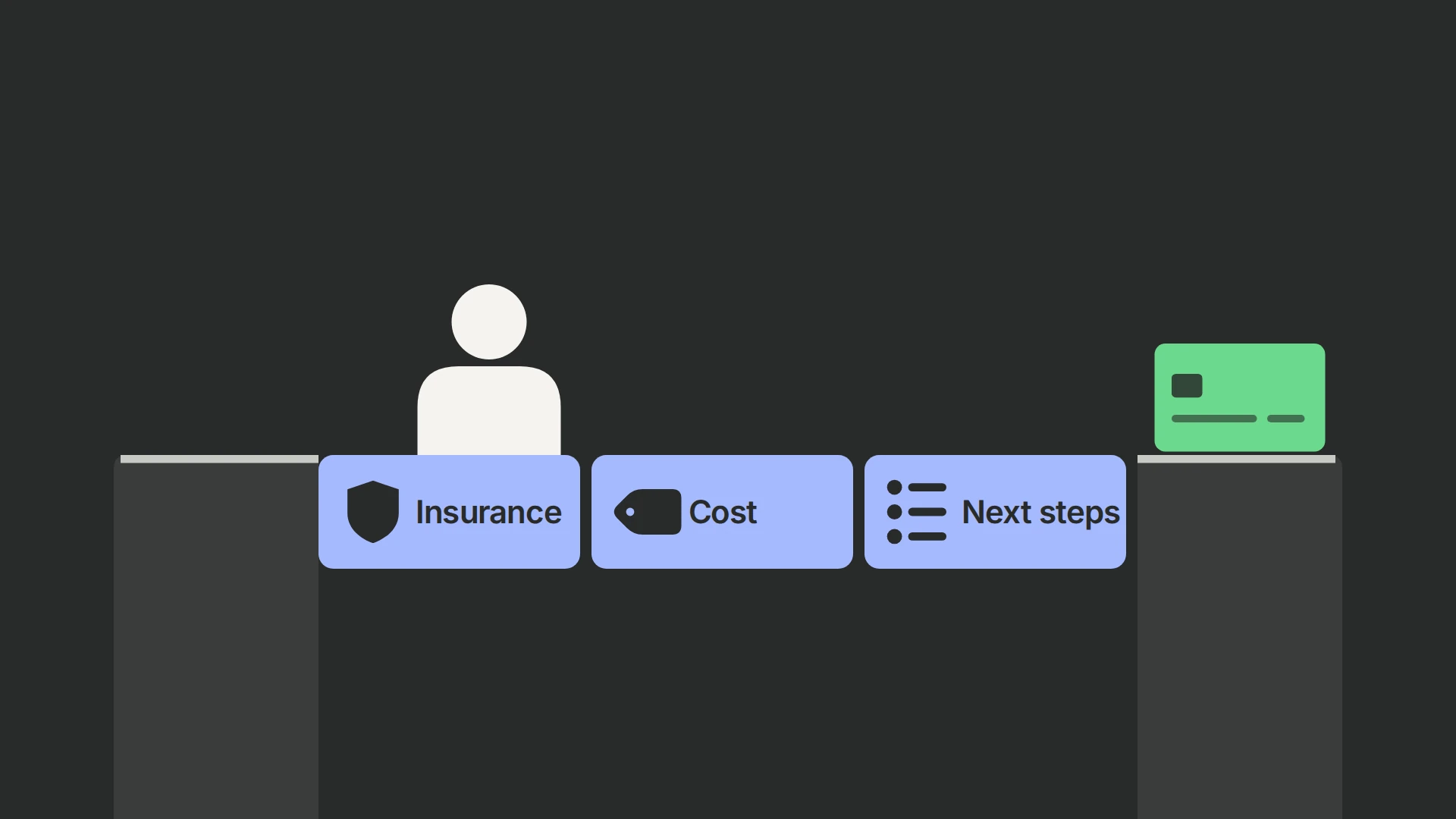
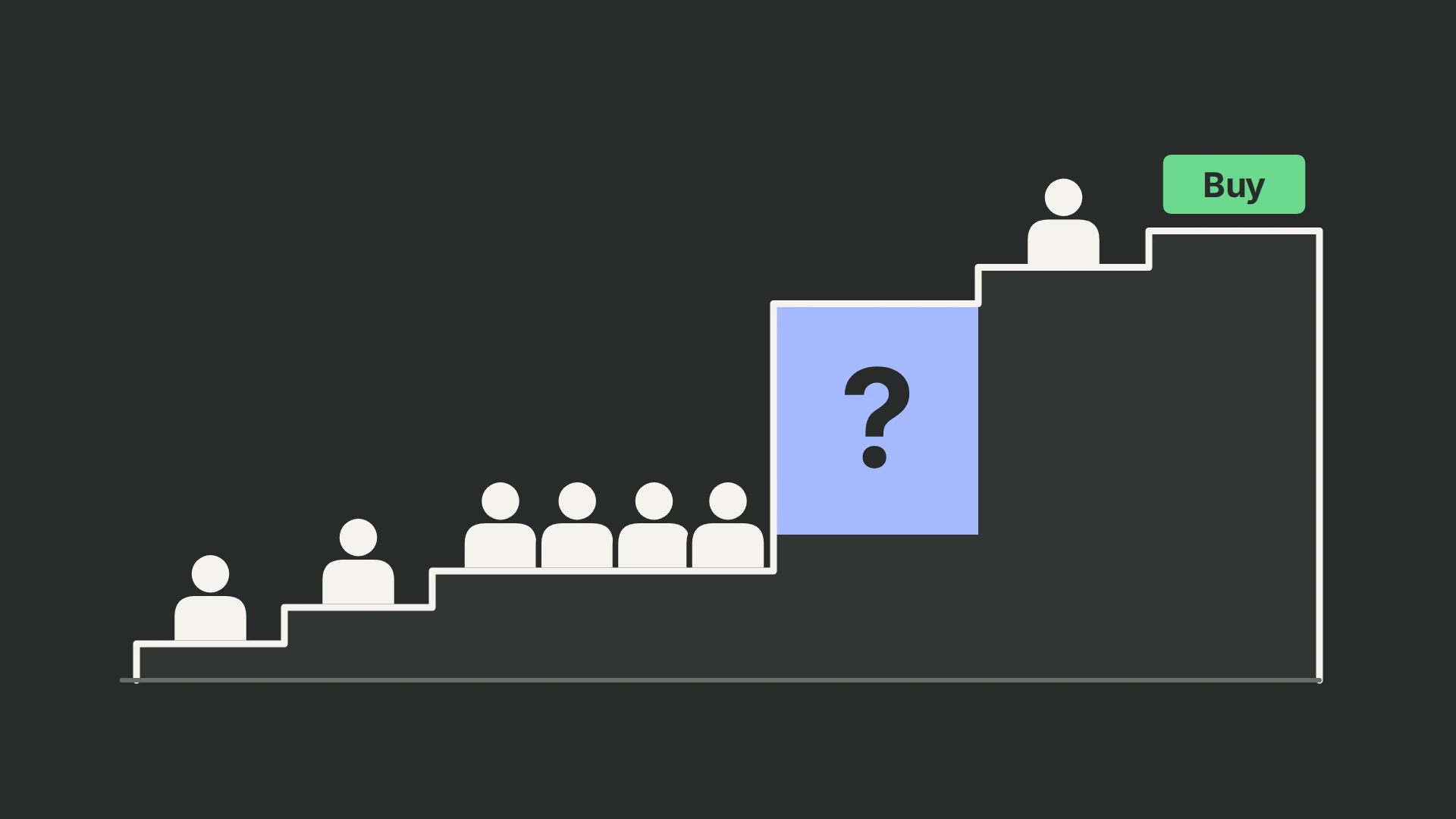
People visit without buying when the page leaves them unsure what the product is, whether it is for them, what it costs, or what happens next; other visitors arrive with no intention of buying. Find the funnel step and audience where potential buyers stop, then use recordings and their questions to distinguish an unanswered worry from a broken interaction or a mismatch with the offer.
If your website has a conversion problem, first confirm the drop is real: check recorded purchases or leads against your order system or CRM. Then find the step where potential buyers stop.
Why are people visiting my website but not buying?
Visitors leave without buying for four common reasons: a question the page does not answer, a page that does not match why they came, a step that is hard to complete, or no intention of buying. In our work the most frequent is the first: the site does not explain what it is, who it helps, which problem it solves, what you get and the price. Check whether someone unfamiliar with it can answer those five before changing its appearance.
| Possible cause | What to look for | How to investigate |
|---|---|---|
| An unanswered question | People revisit pricing, delivery, coverage, returns, or process information before leaving. | Ask what they still need to know before deciding; check whether the answer appears before the commitment it affects. |
| The wrong expectation | An ad promises one product, price, or outcome, while the landing page leads with another. | Read the ad or search query beside the page. Follow the same path on the same device. |
| Difficulty completing a step | Repeated clicks, validation errors, lost form answers, or an unusable payment control. | Reproduce the interaction and confirm whether the completed action reaches your order system or CRM. |
A recording shows what happened, not what someone thought. Treat repeated visits to a price section as a clue to investigate, rather than proof that the price is too high.
How can I get more sales from the website traffic I already have?
Find the step where qualified visitors stop, answer the question that stops them there (total cost, delivery, coverage, what happens next), repair broken steps, and test the change against the current page on purchases per visitor; keep what wins. Judge each change by completed purchases or qualified sales per original visitor, rather than by clicks into the next step.
Our consumer-health case shows why that distinction matters. The team evaluated tests on purchases and deployed a variant only at a 90% or higher chance of beating control on that outcome. The sequence changed direction as the evidence identified unresolved questions:
| Concern or question | What changed | What happened |
|---|---|---|
| Health funnel: uncertainty about coverage and the buying process | Added an explanation of coverage, the reason for the review fee, confirmation, and next steps. | Purchases increased 24% relative to control. |
| Health funnel: the full cost was difficult to piece together | Explained the complete cost structure before visitors entered the funnel. | Purchase conversion increased 15.36% relative to control. |
| Health funnel: would a more visible CTA help? | Removed introductory information to make the CTA easier to see. | Payment conversion fell 30.23%. Removing that information made the page less effective. |
| Lead funnel: would easier answers produce a better result? | Replaced written application answers with multiple choice and rewrote the questions. | Submissions rose 56.7%, alongside sales-team reports of poorer leads and attendance. The effect on purchases per assigned visitor was not established; see the form-quality tests. |
In the health case, twelve concluded experiments over seven months produced five deployed wins. Four deployed purchase-conversion wins of at least 7% compounded to 124.78%, reported as 124% in the headline; the smaller win was excluded from that headline.
The concern explains why a change is worth testing; the experiment measures whether it helps. Our published experiments include losing and inconclusive results as well as gains.
How do I know what to change on my website to increase conversions?
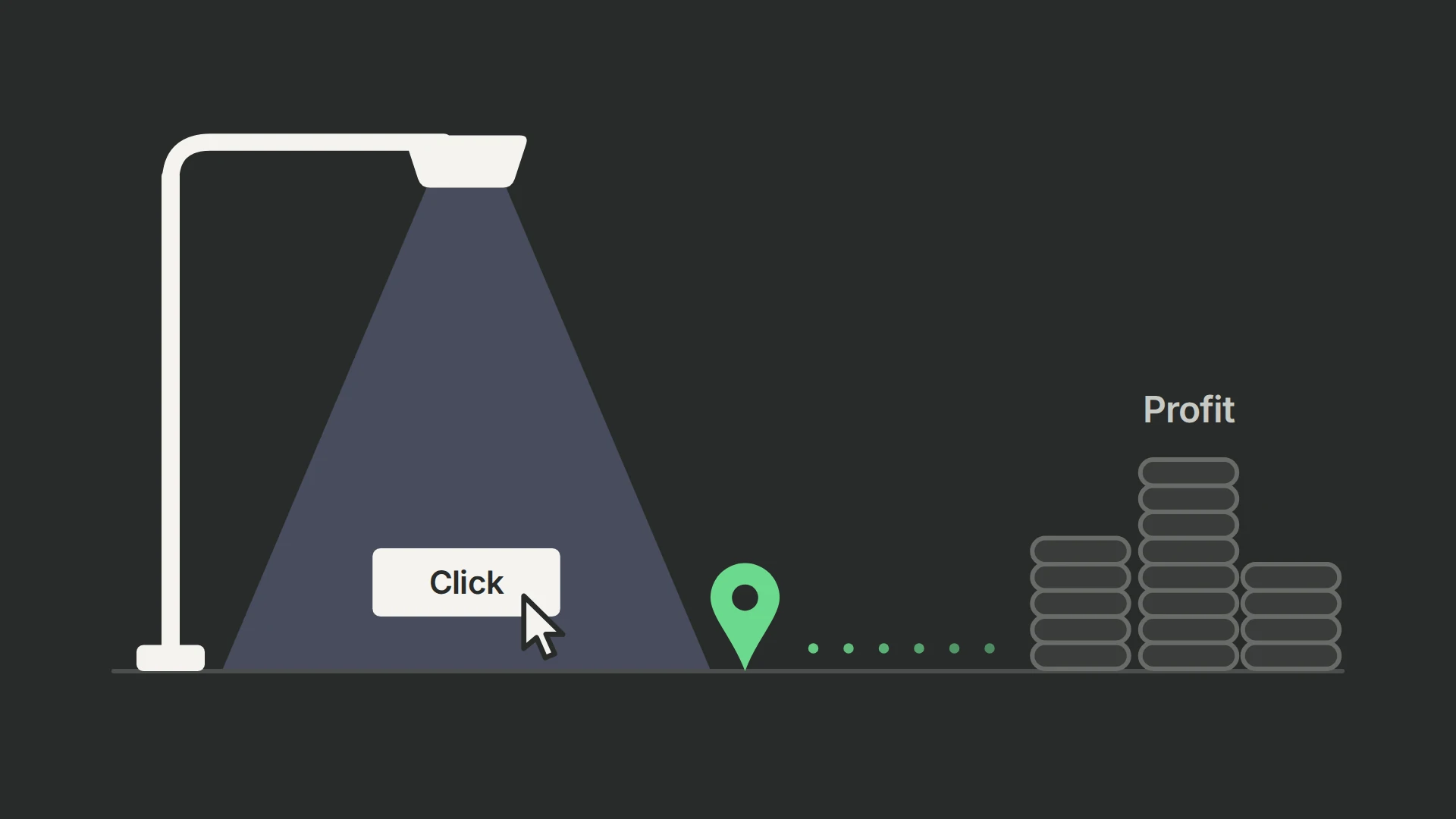
Measure completion at each step of the buying journey, then compare the same journey by traffic source, device, and new versus returning visitors. Investigate the step that loses the most plausible business value, rather than automatically choosing the largest percentage drop.
- Define a completed conversion. For ecommerce, use a confirmed purchase; for lead generation, distinguish a submitted form from a lead the sales team accepts. Compare a few recorded completions with the order system or CRM before diagnosing the funnel.
- Write the actual journey. For example: product viewed → added to cart → checkout started → purchase confirmed. A lead funnel might be service page → inquiry → qualified lead → attended call → sale. Include the handoffs where a visitor changes domains or systems.
- Calculate each step rate. Divide people who complete the next step by people who reached the preceding step, using the same population and follow-up window. If an illustrative 100 people start checkout and 20 purchase, checkout completion is 20%; it is not the site’s overall purchase rate.
- Keep the denominator consistent. Do not divide orders by users in one report and sessions in another. A return visit can be another session from the same person. Allow the normal buying delay before labeling the latest visitors as lost.
| Comparison | A pattern worth investigating | Next check |
|---|---|---|
| Source and intent | A research article brings many readers, while product searches produce fewer visits and more purchases. | Separate learning, comparison, and buying journeys. Check campaign promises and search queries where available before changing the page. |
| Device | Mobile visitors reach checkout but fall behind desktop at address entry. | Try the same form on a phone: keyboard type, address lookup, error messages, payment options, and whether entered values survive an error. |
| New versus returning | Returning visitors buy, while first-time visitors repeatedly open product explanations. | Check what a new visitor must learn before buying. Compare within the same source; familiarity and acquisition mix can explain part of the gap. |
| Time | The conversion rate falls abruptly after a release or campaign change. | Check the deployment, tracking, traffic mix, stock, and offer before assuming the audience changed its mind. |
Keep the counts beside the percentages. A segment with two purchases is a weak basis for a redesign, and an aggregate decline can come from a larger share of research traffic even when each buying segment performs as before.
Next, watch recordings of people who reached the suspect step and stopped, alongside some who completed it. Look for repeated errors, backtracking, searches for missing information, or a handoff that appears to end the visit. Add a neutral on-page question such as “What do you still need to know before deciding?” Compare recurring answers with sales and support questions; do not infer the cause from one dramatic recording.
What should I test first on my website?
Test the answer to the strongest unanswered buying question at the step where the most qualified visitors stop. Most often that is what the product is, what it costs in total, or what happens after purchase. Turn that concern into a hypothesis, estimate the value affected, and rank it against the work needed to test it.
For example: “Visitors reach the payment step without understanding the full cost. Explaining the total cost and when each charge applies before they start should increase completed purchases per eligible visitor.” That names the concern, the change, the audience, and the outcome. “Make the page cleaner” does not explain why buying should change.
99Ways develops hypotheses from existing behavioral data: where visitors come from, what they intend, and which worries stop them at each step. We choose the ideas with the client, using impact × confidence × ease to order them:
- Impact: how many relevant visitors reach the problem, how many valuable outcomes could plausibly be recovered, and whether the change affects sales or only an intermediate click.
- Confidence: how well funnel behavior, customer questions, recordings, and previous experiments support this particular explanation. Several observations of the same issue give a stronger reason to test than an aesthetic preference.
- Ease: the research, design, development, QA and dependencies the change needs; the less work, the higher the score.
Fix a reproducible defect directly. Test an uncertain improvement against the existing experience, with the main business outcome chosen in advance. One hypothesis can require several coordinated edits, but its result will describe that package; it will not establish which edit caused the gain.
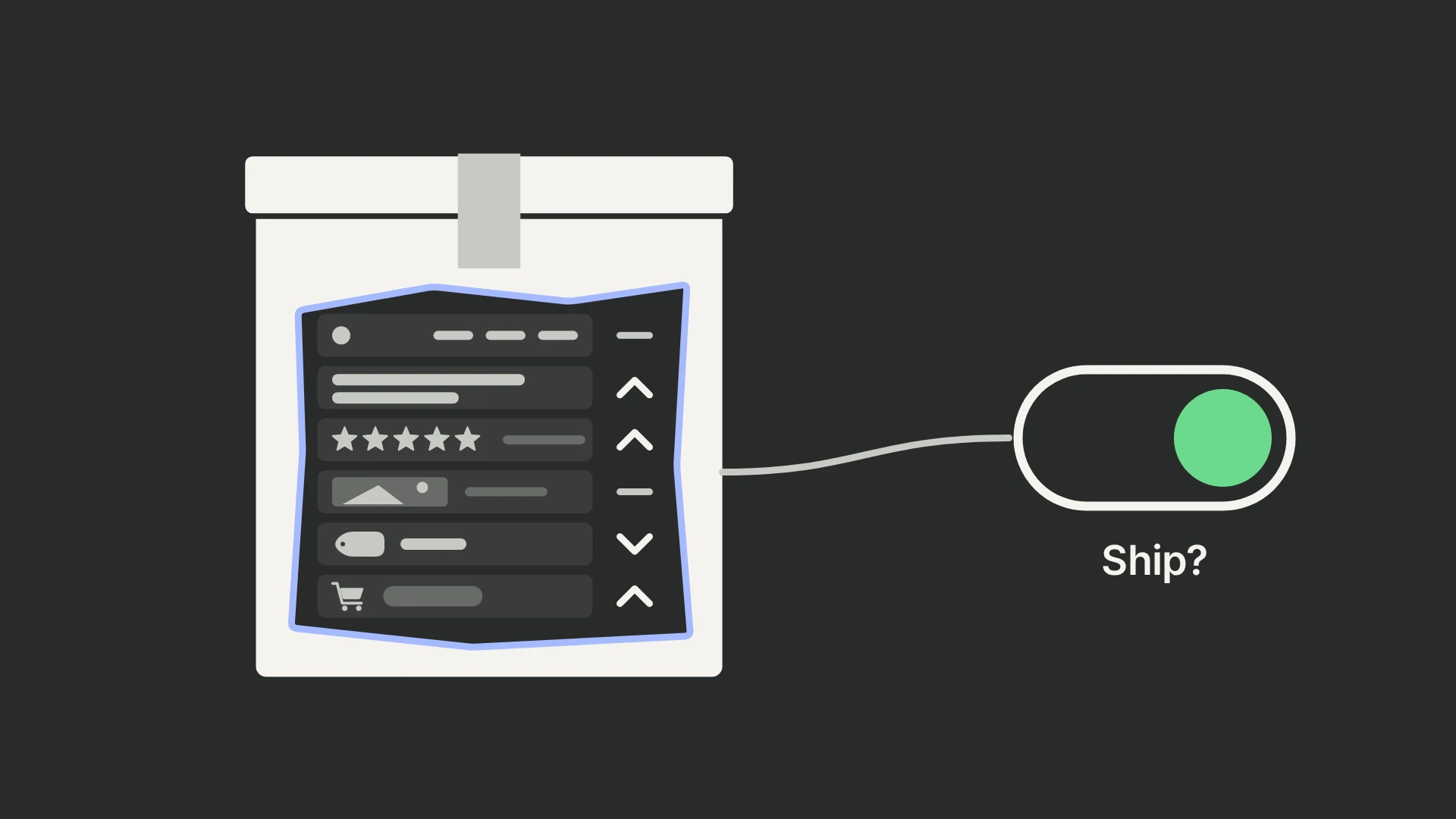
Our decision process connects that prioritization to measurement and a recorded ship, revise, or reject decision. In the managed service, the client approves ideas and 99Ways handles research, measurement, design, build, QA, and analysis, end to end or within the client’s workflow.
What is a good conversion rate for my website?
In Littledata’s sample of 436 Shopify stores, the median store converts 1.4% of sessions; above 2.7% is the top fifth and above 3.7% the top tenth. Landing pages convert at a median 6.6%, and sites in Ruler Analytics’ data average 5.13% for qualified leads or sales. A good rate for you is one that produces enough valuable customers for your acquisition costs, so compare only against benchmarks whose audience, conversion event and denominator match yours.
| Population | Published benchmark | What it measures |
|---|---|---|
| Shopify stores using Littledata | Median 1.4%; top 20% above 2.7%; top 10% above 3.7%. (+) | Sessions containing a purchase, across 436 stores, July 27–October 24, 2026. This is a selected sample of Littledata stores, not every Shopify store. |
| Landing pages in Unbounce’s 2024 report | Median 6.6% across industries. (+) | Landing-page conversion events; the report measures event completion, not the monetary value of each event. |
| SaaS landing pages in the same Unbounce report | Median 3.8%. (+) | Conversions on SaaS landing pages, not trial-to-paid conversion inside a product. |
| Ruler Analytics customers across 13 industries | Average 5.13%. (+) | Qualified leads or sales in a mixed-industry dataset covering more than 110 million sessions. This is not a B2B-only benchmark. |
| Free-trial products in ChartMogul and ProductLed’s January 2026 survey | The reported funnel has 45 signups and 3.6 paying customers per 1,000 website visitors: 8% signup-to-paid. (+) | Respondent estimates within a survey of 200 software products; payment within six months of the lead or free signup. |
Littledata counts purchases server-side from Shopify, including orders that ad blockers and browser privacy controls hide from client-side analytics, so a store reading client-side GA4 can sit below its benchmark for measurement reasons alone. (+)
Use those figures to ask whether you are comparing the right thing, rather than to set a universal target. Your own step rates show where buying stalls. Your trend, compared within similar sources and devices, shows whether that step is improving. Keep orders, qualified leads, refunds, and customer value visible so a higher rate does not conceal a worse business outcome.
When is the website not the main conversion problem?
Investigate traffic and the offer when visitors arrive for something you do not sell, cannot use the product, or understand it and still see too little value at the price. A page can explain an offer more clearly; it cannot make an unsuitable product meet someone’s needs.
- Check acquisition intent. Compare the ad, query, referring page, and landing page. A tutorial reader looking for a free answer should not be judged by the purchase rate of someone searching for your product. If only one campaign brings irrelevant inquiries, investigate that campaign before replacing the whole site.
- Separate price confusion from price rejection. Someone asking what the total will be needs an explanation. Someone who understands the total but cannot justify it raises a question about value, affordability, or the offer. Ask what they expected and what alternative they would choose before testing a discount.
- Check fit after the sale. Repeated cancellation, refunds, or sales rejection for the same unmet need can expose a mismatch that acquisition copy alone will not fix. Use those conversations to refine who the offer is for and what it promises.
These patterns narrow the investigation; they do not prove a cause. Compare like-for-like audiences and ask customers before deciding that the page, the price, or the traffic is responsible.
Frequently asked questions
How do CRO experts decide what to test first?
They rank ideas by impact, confidence and ease, using behavioral evidence: how many qualified visitors reach the problem, how well recordings, questions and past tests support the explanation, and how much work the change needs. They fix what is broken directly and test what is uncertain, starting where the most valuable visitors are lost.
How do companies decide what to test?
From evidence about where buyers stop and why: funnel step rates, segments, recordings, customer questions and earlier experiments. The team agrees one main outcome, ranks the hypotheses by impact, confidence and ease, and the person who owns the decision approves the order.
How long does it take to find a conversion problem?
A broken form can be diagnosed as soon as it is reproduced. Understanding a buyer’s hesitation takes enough completed journeys and customer feedback to separate a recurring pattern from isolated behavior. Start with tracking reconciliation and a segmented funnel; if those are missing, collecting the evidence comes before estimating the benefit of a change.
Should I redesign my website if it is not converting?
Redesign when the current structure cannot support the offer or buying journey, or when a rebuild is already necessary. Otherwise, investigate the specific obstacle first. A tested redesign can answer whether the whole replacement performs better, but not which component helped. Use the redesign decision guide to choose the scope.
What if my website does not have enough traffic for A/B testing?
You can still reproduce defects, compare the page with customer questions, interview buyers, and improve missing factual information. Reserve A/B tests for changes whose plausible effect can be detected with the traffic entering the test. Our traffic and duration guide shows the sample required for different baseline rates and lifts.
What should I test first on a product page?
Test the answer to the strongest unresolved buying question. If visitors cannot tell what is included, improve that explanation; if they cannot work out total cost or delivery, address those terms before the purchase decision. Choose from observed questions and behavior, keep the offer otherwise stable, and measure purchases rather than add-to-cart clicks alone. On Shopify, our Shopify CRO guide shows which product-page changes moved purchases on one store.
Is checkout usually the reason visitors do not buy?
Do not assume it is. Baymard’s 70.22% average cart-abandonment rate combines 50 studies and describes abandoned carts, not a measured checkout defect on your site. (+) First separate visitors who never add to cart, those who leave the cart, and those who start but do not finish checkout. Then reproduce the suspect step and investigate its costs, requirements, and errors.
Do I need an A/B test before fixing an obvious problem?
No. Repair a reproducible failure such as a submit button that does not work or a payment error that prevents valid orders. Verify the repaired path and its tracking. Use an experiment when the uncertainty is whether a different explanation, offer presentation, or interaction increases the business outcome.
Does a high bounce rate mean my page is bad?
It is a reason to investigate the visit’s purpose and the metric’s definition. Someone can read an answer and leave having completed their task. For a buying page, inspect whether the intended audience reaches the next meaningful step and eventually purchases; bounce rate alone does not explain why they stopped.
When should I bring in CRO help?
Consider help when you cannot locate the loss, connect it to customer evidence, or implement and measure the next change. Ask who will verify the funnel, write hypotheses, build variations, and decide whether to deploy them. The agency hiring checklist sets out the work and evidence to compare.